Tag Archives: Fiction

MAKO MORI & BECHDEL TEST

Creative Pencil

While writers peruse agents’ BIOs or blogs, they may notice a few mention manuscripts need to pass the Mako Mori Test or the Bechdel Test. Have no fear, they aren’t going to had out exams to give you an anxiety attack! These are tests to make sure the story isn’t gender biased, which is important to be well marketed. So how do writers pass the tests? Here are the guidelines:

BECHDEL TEST

  1. The movie has to have at least two women in it,
  2. who talk to each other,
  3. about something besides a man

MAKO MORI TEST

  1. At least one female character;
  2. who gets her own narrative arc;
  3. that is not about supporting a man’s story.

Sounds simple, but it’s easy to forget to make your female characters organic when your lead may be a man. Follow these guidelines and you’ll have a story that feels real instead of cut-out paper dolls.

P.D. Pabst
Blogger and writer of MG/YA fiction

Images That Inspire Me

Most of you have read my article THE IDEA-TOILET PAPER and know I can get ideas from anywhere. However, I’ve been asked to share some pictures that have inspired me. I decided a place to start would be my banner, which you can also see in other places like my twitter and Facebook author accounts.

cropped-arrowhead-lake-grave-yard1.jpg

I have another at a different angle for the other accounts. (And just so y’all know, I took this picture.) It inspired the location for my middle grade story BEAST, which is a twisted fairytale retelling of BEAUTY AND THE BEAST. This is a snapshot at the edge of a lake I walk and the cemetery across from the east side of the path. At the right moment of the day, when a white mist hovers over the lake, the area can look quite haunting. And although it inspired the location, it did not inspire the story’s premise. BEAST is an expansion from a story I wrote during English class nearly twenty years ago. And yes, I still have the graded paper!

Scary Manor 2

I came across this manor while googling old structures to get a better sense of design while writing THIS SCARY MANOR BLOWS. The home Agnes’ family inherits is somewhat similar to this one, except hers has turrets, secret passages, and hidden rooms, oh and ghosts! Also, the main floor has more height and a lengthier staircase leading to the front door. Agnes fell in love with old buildings because her dad was an architect. It was important for me to get descriptions right through her eyes because she missed her dad so much.

Black Fog

I wrote BLACK FOG after a vivid dream, much like a very long movie trailer. Back when I wrote the story, I had googled images of black fogs to help me describe the appearance of the creature. While I can’t find the original image I used, it was very similar to the one above. Now add life to the blackness by imagining the ominous fingers billowing around your chest and dissolving your flesh to ash. Voila! My character was born.

As much as I’d like to show photos all day, I won’t post a never ending blog. Just know, authors use various tools to help them describe the images they see in their head. Whether it be drawings, pictures, paintings, statues, trains, objects in their home or a hotel, the sky, their yard, the list is endless. And of course, sometimes writers use nothing but their noggin because the character or place is already so vivid. Either route an author takes is fine by me, I just want to be sucked into a story that seems plausible.

P.D. Pabst
Blogger and writer of MG/YA fiction

Joanna Swainson, Literary Agent (Plus First Page Critique)

Joanna Swainson has worked for a number of different London based literary agencies, including Darley Anderson Literary, Film and TV Agency, and Christopher Little Literary Agency, where she met Caroline Hardman. They set up Hardman & Swainson in June 2012, with eighteen authors. In September 2014 they were joined by agent Hannah Ferguson. Hardman & Swainson now represent 60 authors across a range of genres of fiction and non-fiction. More info at www.hardmanswainson.com

joanna

1. Does the rumor that agents get extremely excited over plucking a gem from the slush really exist?

It’s very exciting to find a gem in our submission. The excitement comes in different shades: there’s a quiet excitement when you read something and can’t stop and feel you’ve got something special. That excitement strengthens as you begin to think about editors that would like to read it too. Once you know it’s something you want to represent there’s the thrill of signing the author. Then there’s nervous excitement when you come to submit to publishers. I think the funnt gif shows the out and out happy excitement of when an offer comes in from a publisher. But that’s strictly between the four walls of the office! Generally speaking, finding a gem in submissions leads to much excitement in many different guises.

Excited GIF

2. Are you a hands-on agent with your authors, editing-wise?

Working editorially with authors and helping to knock a manuscript into shape is one of the most interesting and rewarding parts of this job. Working out what works and why, where a manuscript falls short, which aspects need strengthening etc – it’s endlessly fascinating. The job of editing can take many forms from a few simple suggestions to quite a full on rewrite. It depends on the state of the manuscript. It’s not my job to edit it to death, but to take it to the point where I feel it’s ready for submission – hopefully an editor will then have a vision for it and want to buy it!

3. You keep an open mind about the types of submissions you’d like to receive because you never know what will excite you—which is totally awesome! But, is there something that you’d like to see in your inbox that you haven’t seen yet?

I feel like I’ve seen everything! But our submissions inbox never fails to amaze me. It’s incredible how many people are writing works of fiction and non-fiction, and what they come up with. The key thing is whether what we see is good enough. As you say, I’m open to most things, but it has to be a real sparkler, brilliant of its kind. It’s a very tough market so we have to feel confident about what we’re taking on.

4. The agency website suggests that authors in the US might be better served with an agent in the US, unless there’s a compelling reason for a UK agent. So, would you say that you aren’t totally against receiving submissions from a US author, but they should include a reason as to why they believe they need a UK agent to represent them?

We’ve put this note on our agency website because we were getting a lot of submissions where it simply didn’t make sense to have a UK-based agent. So if, for example, the novel is about baseball – which isn’t a big thing in the UK – or has a particularly American theme, it doesn’t make sense for us to take on this novel unless we’re confident it will straddle the two markets (often very difficult to predict). Our aim is always to sell in the UK and, where appropriate, in the US (and indeed worldwide) but we’re usually thinking about our own market in the first instance. But never say never – we just think US authors should think carefully why their novel or piece of non-fiction would work better, or equally well, with a UK agent. If the author can articulate that, I suppose this also wards off the idea that sometimes creeps into the back of your mind as you’re reading – that all US agents have been exhausted, so that’s why they’ve submitted in the UK.

5. Personalization in a query is often debated. Do you prefer someone to tell you upfront why they are querying you, or get straight to the story their submitting? Has personalization ever made you feel an author was stalking you?

It depends what you mean by personalisation. I think with query letters it’s just good to keep it fairly short and sweet, professional and to the point. Obviously if I met you at a writers conference or some other do, then absolutely jog my memory. I’ll likely be thrilled to hear from you. The only time I’ve ever felt stalked is when we were left some creepy packages on the doorstep over a period of a few weeks. I think it was meant to build up excitement to the arrival of the manuscript in the final package, but all it did was have me double locking the door and quaking with fear.

6. There are authors who spit a MS out based on what’s trending, and others that simply write what they want to read. Any advice/feelings on either route chosen?

Don’t follow trends. What makes most sense to me is write what you’d like to read. Publishing isn’t exactly known for its speed so if you follow a trend, by the time it gets to the agents / editors, the chances are it’ll be done and dusted by that point and everyone will be sick of seeing the same old, same old.

Thank you, Joanna, for taking time to answer my questions. Joanna has been kind to offer a first page critique, even with her busy schedule! (Yay!) This is open to everyone (English written) and Joanna reserves the right to ask for more material if she’s interested in your project. The contest will be open for one week, ending at midnight on March 30, 2015. The winner will be announced on an update to this post. Good luck!

SUBMISSIONS ARE NOW CLOSED!

Congratulations to CATHERINE MILLER, winner of the First Page Critique!

And don’t forget to check Joanna out at Hardman & Swainson or follow her on Twitter for bookish tweets. There is also an official Hardman & Swainson Twitter here. Have a fantastic day!

P.D. Pabst
Writer and blogger of MG/YA fiction

REVIEW: ANNA DRESSED IN BLOOD by Kendare Blake

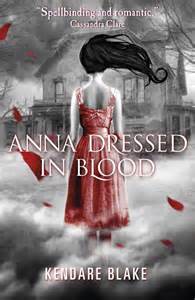
Oh my goodness, YES! This was my reaction when I first saw the cover of ANNA DRESSED IN BLOOD. (Covers are extremely important people, to evoke emotions and desire to pick the book up off the shelf!) And the blurb didn’t disappoint. I read that the main character, Cas Lowood, killed the dead. Then I wondered how he could kill someone that was, well, already dead. Which was exactly why I had to read the book!

ANNA DRESSED IN BLOOD

Cas travels around the country with his “kitchen-witch mother” while killing misbehaving ghosts. His weapon of choice is a wicked anthame he inherited from his father—who was murdered by a ghost he’d attempted to kill. Cas explains he doesn’t completely understand the power of his anthame, but he believes it will only work for him. He strikes his targets down with an artistic slashing confidence as ghosts disappear so that they will never murder another living victim.

Then Cas gets a tip about Anna Korlov, a ghost murdered at the age of sixteen. She’d been on her way to a dance when someone nearly cut her head off, causing her beautiful white dress to be drenched in blood. She had been murdering anyone that stepped foot in her home since 1958. But when Cas finds himself lying helpless on her living room floor after a jerk acquaintance bashed his head with a broken board, Anna spares Cas and murders the jerk by splitting him in two gruesome parts.

For once, Cas has trouble using his anthame on a ghost, although he knows he should. He knows she’ll keep killing others, even if she won’t kill him. But let me assure you, his fascination about why she spared him does not lead to a typical love story with mushy-mushy crap. No. He still attempts to do his inherited duty and kill her, and strangely, she wants him to kill her. So, you see, I had to keep reading!

The author does a great job of describing how Cas understands he has to have a life of solitude and that he feels out of place with the living. So when he winds up with a couple of unexpected friends who help him along his journey, I was surprised. Kendare describes Cas’ life and the ghosts surrounding him with exquisite creepiness. But I won’t tell you if he murders Anna, nor will I tell you if he crosses paths with his father’s murderer. (What, you weren’t wondering about that? Riiiight.)

I recommend this book to all those who love spooky and won’t be disappointed if there’s not a lot of kissy junk. You can buy this awesome book on Amazon or Barnes & Noble.

Have fun reading!
P.D. Pabst


#AdPit TWITTER PITCH PARTY TODAY!

I don’t write adult fiction (yet), but want to make sure any readers that do are reminded of the #AdPit Twitter party today. It’s for Adult Fiction, Adult Non-fiction, and New Adult manuscripts only. You must have a 140 character pitch that includes the #AdPit hashtag. And remember, although there are legitimate agents that have committed to dropping by, any one can troll the feed. SO DO YOUR RESEARCH before sending your manuscript or signing any contracts! Heidi Norrod is the event organizer and you can find her at @HRNorrod if you have any questions.

As always, good luck!

P.D. Pabst
Writer and blogger of MG/YA fiction

Ren Warom: Author of THE LONELY DARK

If you’re in need of an eerie tale but short on time, Ren Warom‘s THE LONELY DARK will be a perfect fix. This sixty-eight page novella leaves you questioning the darkness surrounding you at night and pulling the blanket over your head. You can follow the story of Ingmar’s journey as a Cerenaut aboard the Irenon where she must cope with isolation and a “danger that cannot be seen, quantified, or understood” here (US) or here (UK).

The Lonely Dark

1) Will you share with us when you first realized writing was your thing?

I’ve written for as long as I could form words. I used to write actual stories when I was a little girl. I wrote quite a few about a character called Jennifer (I think it was) and the Mugwumps, which were these white, fluffy, forest dwelling creatures. My sister mocked it horribly. I learned to read very early and read widely from an early age, so I think that was the real driver behind my interest, not to mention the fact that I was perpetually in my own little dreamworld. But the moment I realised writing was my thing? Gosh. I don’t think there ever was a moment, not a single one. I first loved to read, then to write, then gradually, over the years, writing became breathing. That’s it. If I don’t write, I don’t breathe.

2) Have you had a smooth ride to publishing or a bumpy road? (Us writerly folk love hearing other’s journeys.)

This one’s complicated. I found the publisher for my novella myself. Fox Spirit had already published some stories of mine, and the market I had written the novella for sort of vanished (it’s more complicated than that but I won’t go into it), so when I needed a publisher I thought of them. To my delight they wanted The Lonely Dark and so that was that. Some edits, proofreading and one gorgeous cover later and I have a book baby out. It’s scary but exhilarating!

With regards to trad deals, via my agent, that’s still an ongoing battle. I had a book out on sub (COIL–you might remember it from litopia, as it did the rounds in the Houses) and that generated a lot of interest but no offers, though it got to a couple of seconds reads, which is a living nightmare of hellish waiting. I think that’s all but dead in the water now, but it’s a book I want out there and it’s the first of a trilogy, so if all else fails I will self publish at some point.

I have another book going out on submission rounds soon. Equally hard to define. I’m hoping that, if it doesn’t find a home, keeps editors interested in me. That’s the important thing, keeping yourself and your work on the radar of editors and hoping, eventually, you produce a work they can throw their enthusiasm behind. Editors want to love books, just like agents do, it’s just a case of writing the book they can love or, in my case, finding the editor who loves the weird book you’ve written.

2) Can you tell us about how you found your agent? 

I started looking for an agent in mid-2011. I subbed to about five agents in my first round, collecting a few rejections pretty swiftly. In late November, I happened to be on twitter and noticed that Stacia Decker at Donald Maass, one of the agents on my list but as yet un-subbed to, was closing to subs at the end of that month. So basically I went into a panic and sent off my submission package, which I always personalised because it’s rude not to. Don’t send mass form subs.

Anyway, Stacia requested a partial, then within days of that being sent I received a request for the full. At this point you’re hoping and trying not to hope, but in late Jan 2012 I received an email from Jennifer Udden, also at Donald Maass and more interested in repping sci-fi, who’d been passed my MS and loved it and wanted to talk exclusive revisions. We had a phone-call to discuss said revisions, and came to an understanding about what Jen wanted and what I could do. I then revised over a couple of months and sent the revised MS back. To my utter astonishment Jen was pleased with the revisions and basically offered representation in a phone-call cramped in between her office hours in New York and me needing to rush off out to meet friends for the afternoon. Very, very exciting, surreal, and strange, so much so it took me all evening to tell one of said friends that I’d just got myself an agent, because it really did not feel real. I expect every first step is like that. I know getting The Lonely Dark published felt like that, so I fully expect any luck with the trads to be the same. It’s your dreams, you know? When they come true it’s kinda bonkers.

4) Do you have a creative process/ritual you do on a daily/weekly basis?

No. I sit my bum at my desk or at a desk somewhere, and I write. It’s taken me a long time to just get disciplined about it. It wasn’t that I believed in a muse or any of that, I don’t, but I lacked discipline. Not in the laziness sense but with regards to levels of seriousness–I imagined myself to be way more serious about writing than I in fact was. In truth I was terrified of being serious, even with the fact of representation meaning that I was, perhaps, capable of doing this. It’s that whole don’t try, can’t fail thing. Now I know it’s all about the work, so I do it. Simple as. There’s no trick to it.

5) You open THE LONELY DARK with a paragraph of Ingmar packing, leaving the reader intrigued to know where she is going and why. Do you find the opening of books the most difficult to write, since so much emphasis is put on this paragraph being the “attention grabber”? 

Beginnings are nightmares. I loathe them. Finding my way into a story is always the most painful part. I quite literally agonise over it. I fumble, stumble, write and rewrite and generally get my brain in a right old pretzel over it all. I don’t imagine that part of it will ever become easy for me, because it remains the same whether I plan or not. The only thing changing is the length of time it takes to stumble upon the right beginning for each story. Thankfully that is shrinking. I think I’d go crazy if it weren’t. Needing months to find ingress to a story is taking the Michael just a touch!

6) Your main character, Ingmar, has an unusual and unique talent of “perceiving the remnants of the dead”. (BTW, I love that phrase!) How did you come up with the idea to not have her see actual ghosts?

When I began writing The Lonely Dark I had been inspired by ghost stories set in that region with very real, tangible entities. But when I got to talking of the entities in Ingmar’s life, they came as remnants. It made perfect sense to me to do that, because of how Ingmar would be in the Irenon: there, but invisible. I felt it was perfectly appropriate to have her understand that state and yet fail initially to apply that knowledge to her own state. I like repeating patterns and parallels. It’s basically metaphor 101 to me, an easy way to create depth. They pop up on purpose and by happy accident. I think my brain is wired to look for them and seed them throughout whether I’m paying attention or not. Luckily though, this was one I did purposefully. I don’t think you can take credit for the happy brain accidents.

7) Perhaps everyone at some point in their life has a moment they’re afraid of the dark and then gets over it. But THE LONELY DARK is a story of Ingmar’s decline from embracing the darkness to fearing it. Any personal experiences that you used to twist into Ingmar’s life for this experience, or was this a product of your brilliantly creepy mind?

I’ve always been afraid of the dark. I’ve always felt it had presence. Weight. It’s not a huge step from that to a Lonely Dark, though it was very much more inspired by the picture of the map of the universe side by side with a map of the brain. That got me thinking about space being alive in a very real way. Not in a human way, but entirely aware, capable of abstract thought, of philosophy, and tortured by a longing for company.

8) After Ingmar boards the Irenon, she realizes Cerenaut training didn’t prepare her for the truth that unravels about darkness. And her copilotnaut (yeah, I made that up) shares similar experiences. Did your characters ever battle with you about taking away the good parts of their memories, or if they’d share more than dark occurrences? (Because every writer understands characters sometimes guide the story for the writer.)

I love the made-up word! No, my characters never battled with me about losing their good memories. My characters never argue, finished. They behave exactly as I expect they will, whether they follow the rules or break them unreservedly. That doesn’t mean I drag them along in the wake of the plot, it just means I make sure I’m true to their approach. It’s not always easy, sometimes you have to stop and listen hard, but I have yet to encounter a full-scale character revolt in anything I’ve written. They seem happy to leave the reins in my hands. J

*And that’s it! Thanks for having me on your blog, Pam; I really enjoyed answering your excellent questions!*
RenWarom

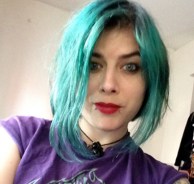
Ren’s a writer of weird things, not known for an ability to fit into boxes of any description. Published in various places, including anthologies by the fabulous FoxSpirit and Anachron presses, and THIS IS HOW YOU DIE, from Grand Central publishing. Her dark sci-fi novella THE LONELY DARK is out now on Amazon, both in the UK and the US! Represented by the fabulous Jennifer Udden of Donald Maass Literary Agency, Ren’s looking to invade book shops near you very soon. Find her on twitter, facebook, instagram and youtube, and on the web at http://renwaromsumwelt.wordpress.com.

Thank you Ren Warom! May you continue to write disturbing tales for twisted readers! (Me included.) To go directly to the webpage that has links to all her published stories, go here.

P.D. Pabst
Writer and blogger of MG/YA

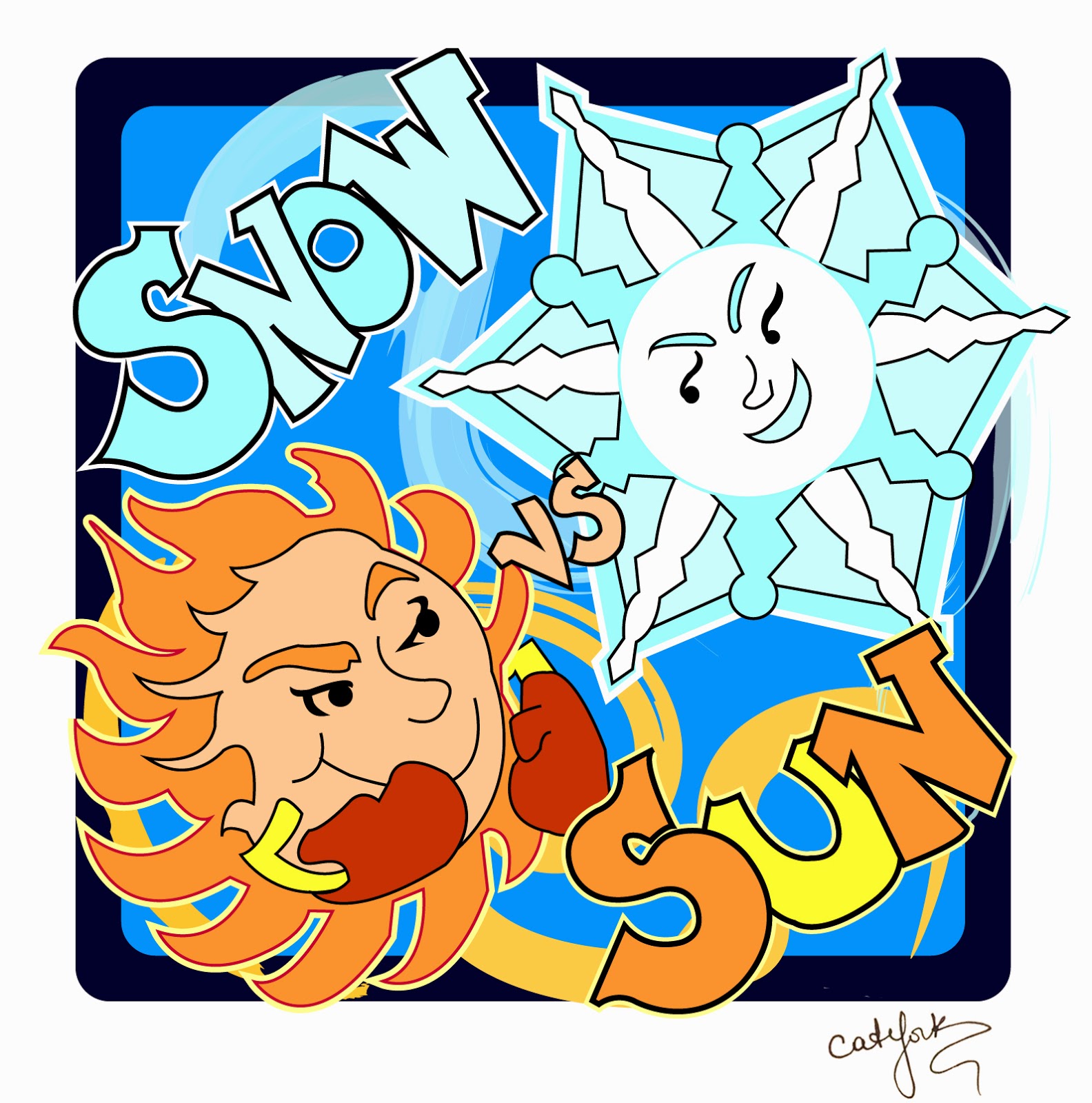
Sun Versus Snow Pitch Contest: #sunvssnow

This is a reminder that Sun versus Snow submission window is Tomorrow, January 26th, 2015 starting at 4pm EST. This contest is hosted by Michelle Hauck and Amy Trueblood. They will only accept the first 200 entries, so don’t delay when the time arrives!

sunvssnow_copy2

You can learn about all the fabulous participating agents here. And if you have any questions, you can email the hosts from their blogs or ask them on twitter @michelle4laughs @atrueblood5 and can use the hashtag #sunvssnow.

Update: Winners will be announced February 2nd and the agent round will start February 9th. Mark your calendars.

As always, good luck!

P.D. Pabst
Writer and blogger of MG/YA fiction


NEW LEAF PITCH PERFECT 2! (TWITTER PITCH)

New Leaf Literary & Media, Inc

If you haven’t seen the tweets on twitter, New Leaf Literary & Media, Inc. is hosting a twitter pitch session today starting at 4pm EST! It will end at 5pm EST. So you’ve only got an hour window to get that pitch submitted!

This isn’t like other twitter pitch contests (ex: #Pitmad or #SunvsSnow) where you pitch once every half hour, this is a one time pitch deal. So, polish up that 140 character pitch to fit the hashtag #NLpitchperfect and figure out your local starting time to correspond to the EST zone. You can check out their official post regarding the pitch event here.

As always, good luck! And my apologies for the short blog notice.

P.D. Pabst
Writer and blogger of MG/YA fiction

Merry Christmas and Happy New Year

Santa

As the year winds to an end, I’m thankful for all the wonderful friends I’ve gained over the past twelve months. The writing community is more supportive than ever imagined. And as y’all know, I tend to pay forward what I learn. Thank you for a wonderful year and please stick around for some exciting interviews, giveaways, and shared knowledge in 2015.

And to my family and unwriterly friends, I’m who I am today because you’ve been a part of my life. I look forward to sharing more happy days with everyone in my physical and virtual world in 2015. (I’ll return to blogging in the new year.)

Be safe! Merry Christmas and Happy New Year!

P.D. Pabst
Writer and blogger of MG/YA fiction

Critique Partners

pencil

If you’re a writer, I can’t stress enough the importance of finding critique partners/beta readers. That’s right, I spoke in plural terms. Each partner might uncover different aspects of your story, such as weaknesses in your character, plot holes, typos, stilted dialogue, pacing and much more. No matter how perfect you think your story is, someone will find an error. And it’s better to find as many errors as possible before you start submitting to agents or publishers, and most importantly BEFORE you self publish!

So where do you find these partners? I found most of mine on Twitter hashtags during writing contests. Someone almost always puts a call out to swap stories for critique. Many times, you gain a permanent partner. There are private writing groups on Facebook that you can join, or places like CPseek. Absolute Write Forums, Write On Con events, local writing groups, and even English departments at your local college and university. Also following blogs of agented writers (such as Brenda Drake or Authoress for starts), can help you find opportunities for free critiques. I’ve found that the writing community is extremely supportive of one another, and among them is a wealth of knowledge!

Things to look for in a partner:

  1. They not only praise but offer the needed critique. If a partner does nothing but praise over your work, they don’t offer you any room to improve.
  2. They offer suggestions. Okay, this doesn’t mean they tell you exactly how to fix something, but at least tell you why something doesn’t work for them. This way, you know what direction to go.
  3. Similar tastes. If you write for middle grade, you may want to find someone who does the same because you both understand ‘voice’ for that genre. Or maybe you write strictly fantasy and want someone who writes the same. But remember, finding someone who writes exactly the same genre and category isn’t completely necessary, as long as they have a passion for the types of stories you write. (But it does help.)
  4. Can meet your dead line. That’s if you have a dead line. If you do, be clear up front and state the time frame. (Ex: You hope to polish your manuscript before entering an upcoming contest.)

There might be other things you desire in a critique partner, but this list is just a starting foundation. For ideas on the worst critique partners, read Chuck Sambuchino’s The Top 10 Worst Types of Critique Partners

As always, good luck and happy writing!

P.D. Pabst
Writer and blogger of MG/YA Fiction